Bologna Hiking Tours: Routes, Prices & Tips
Planning Bologna hiking tours in 2026? Compare routes, guided vs self-guided options, difficulty levels, inclusions, and prices to find the right hike for you.
On this page
Bologna Hiking Tours: The Honest Trail Guide
Bologna rewards walkers far beyond its medieval porticoes and university squares. The hills that frame the city rise into the Apennines within 30 minutes of the centre, offering trails from gentle ridge walks to proper mountain routes. Bologna hiking tours range from a morning climb to the Santuario di San Luca to full-day guided circuits through Parco Talon and the Emilia hills. Choosing the right one means matching the route's terrain and pace to your fitness and travel schedule — and this guide does exactly that.
⚡ Tour Verdict quick take: Planning Bologna hiking tours in 2026? Compare routes, guided vs self-guided options, difficulty levels, inclusions, and prices to find the right hike for you.
Last updated June 2026.
Free: The Bologna Essentials guide
Top things to do, where to stay, a perfect day plan, getting around, and the best time to go — a Bologna mini-guide you can take offline.
Top Bologna Hiking Tour Routes
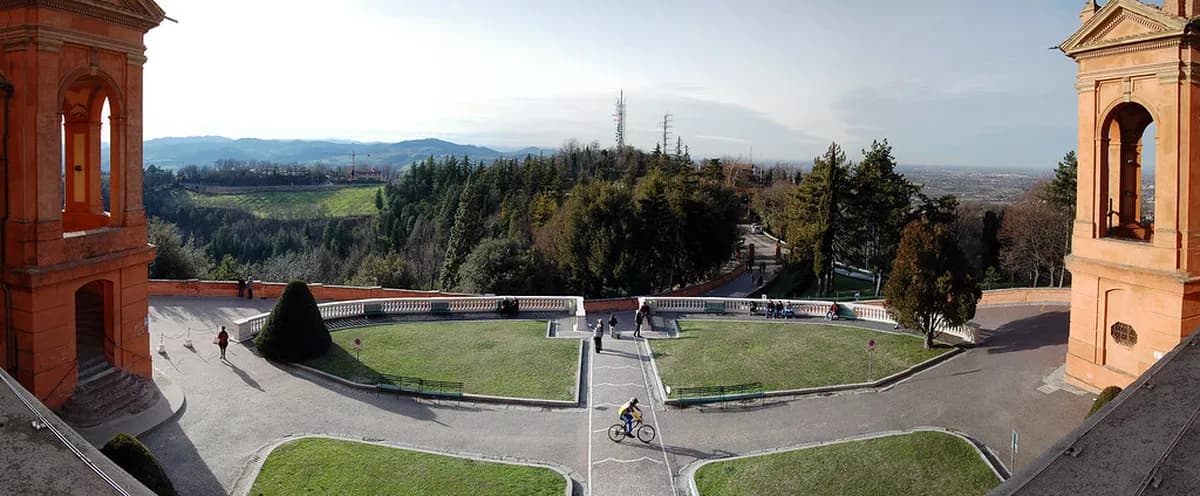
The Portico di San Luca climb is the most accessible trail in the Bologna area, following a 3.5-kilometre covered portico with 666 arches up to the hilltop sanctuary. The ascent gains roughly 150 metres in elevation, and most walkers complete the round trip in two to three hours. Tour operators use it as an introductory route for visitors who want a taste of the hills without venturing far from the city. It also pairs well with a food or wine stop at one of the trattorie near the portico's lower entrance.
For a fuller day out, the Apennines routes north-west of Bologna offer genuine mountain terrain. Trails around Monte Sole and the Savena river valley cross forests, meadows, and wartime memorial sites, giving the walk historical depth alongside the scenery. Some Bologna adventure tours combine trekking here with a packaged lunch and transport from the city centre, which removes the logistical headache of reaching remote trailheads by bus. These circuits typically cover 10 to 16 kilometres and suit walkers with some hill experience.
Parco Talon, tucked into the hills south of the city, is less visited and rewards those who want solitude over scenery checkboxes. The park's network of dirt tracks and ridge paths can be linked into loops of varying lengths, and a local guide adds real value here by reading the unmarked junctions correctly. East of the city, the gentler Emilia hills around Zola Predosa and Monte Calvo offer vineyard-edged paths with open views across the Po Plain on clear days.
- Portico di San Luca
- Distance of 3.5 km each way, with 150 m elevation gain up to the sanctuary.
- Suitable for all fitness levels and accessible directly from the city centre.
- Plan two to three hours for a comfortable round trip with stops.
- Monte Sole and Savena Valley (Apennines)
- Circuits of 10 to 16 km through forests, meadows, and WWII memorial sites.
- Best reached with a guided tour that includes transport from Bologna.
- Moderate difficulty, with some sustained ascent on the valley sections.
- Parco Talon
- Less-visited park south of Bologna with unmarked ridge paths and loops.
- A local guide is strongly recommended to navigate junctions correctly.
- Good choice for walkers seeking quiet trails away from tourist routes.
- Emilia Hills (Zola Predosa, Monte Calvo)
- Gentle vineyard-edged paths with open views across the Po Plain.
- Easy to moderate terrain, ideal for combining with a wine stop.
- Accessible by car or as an add-on to a Bologna wine tour.
Guided vs Self-Guided: Which to Choose
Self-guided hiking around Bologna is genuinely feasible on the Portico di San Luca and the better-waymarked Apennines trails, where CAI (Italian Alpine Club) signage is consistent. A good topographic map or a downloaded offline trail app covers most navigation needs on these routes. The main risk with self-guided hiking in Parco Talon or on lesser-used Emilia ridgelines is trail junctions that are poorly signed or entirely unsigned — a wrong turn can double your distance.
Guided tours earn their fee on the Apennines and Parco Talon routes in three concrete ways: they handle the transfer logistics, they carry group safety equipment, and they layer in context about the landscape, wildlife, and local history that most solo walkers miss entirely. Many Bologna walking tours extend into the surrounding hills with guides who grew up in the region and know seasonal trail conditions first-hand. For first-time visitors or those with tight schedules, a guided half-day Apennines circuit is usually the more efficient choice.
Private guiding costs more — typically €60 to €120 per person for a half-day, depending on group size — but gives you full control over pace and route variation. Small-group tours usually price between €35 and €60 per person and include transport, making them the better-value option for solo travellers or pairs. Check whether your chosen operator is licensed through the Emilia-Romagna trekking guides association, which guarantees minimum safety standards on mountain routes.
Difficulty Levels and What to Expect
The Portico di San Luca rates as easy: a paved path under cover for its entire length, with no technical sections and plenty of benches on the way up. The gradient is steady rather than steep, but the 150-metre ascent is cumulative enough to feel like light exercise rather than a stroll. Sandals and flat city shoes are manageable, though light trainers with grip are more comfortable on the return descent.
Most guided Apennines circuits fall into the moderate bracket — sustained ascents of 300 to 600 metres over mixed terrain including paved farm tracks, dirt paths, and short rocky sections. Expect cumulative distances of 10 to 18 kilometres on a full-day route, with total walking time of four to six hours including breaks. Trail running shoes or light hiking boots are advisable; trekking poles help on the steeper descent segments.
A handful of operators offer strenuous ridge routes in the higher Apennines, reaching summits above 1,000 metres with full-day itineraries and greater exposure to weather. These demand proper hiking boots, layered clothing for summit conditions, and a reasonable baseline of hill fitness. If you are unsure of your level, ask the operator directly — a good guide will match you to a route rather than upsell a harder one.
What's Included and 2026 Prices
Standard small-group Bologna hiking tours in 2026 are priced between €35 and €65 per person for a half-day experience of three to four hours. Full-day guided circuits with Apennines transport typically run €70 to €120 per person, and this usually covers pick-up, a packed lunch or trattoria stop, and entry to any natural reserve areas. Private tours for couples or families sit at the higher end of both ranges but allow custom pacing and route choices that group tours cannot offer.
Most guided experiences include: the guide's fee, transport from a central Bologna meeting point, a brief trail briefing and safety check, and trekking poles on request. Inclusions that vary by operator include meals, water, trail snacks, and printed route maps — always confirm these before booking. Some day trips from Bologna bundle a hiking component with a town visit or food tasting, which can raise the total price but increases the day's overall value.
Self-guided hiking costs almost nothing beyond transport to the trailhead — a bus or taxi to the Portico di San Luca base runs €5 to €15 from the city centre. Budget-conscious travellers can download free trail maps from the Città Metropolitana di Bologna's open data portal before arriving. Booking guided tours two to three weeks in advance is wise in April, May, and September, when trail slots fill faster than many visitors expect.
Best Season for Bologna Hiking Tours
Spring (April to early June) is the prime window for Bologna hiking: wildflowers cover the Apennines meadows, temperatures sit between 12 and 22°C, and trails dry out after winter rains. Visibility from the higher ridges can stretch across to the Alps on clear spring mornings, which makes the effort of the ascent feel genuinely worthwhile. This is also when most guided tour operators run their full schedule, with the widest selection of departure dates and group sizes.

Autumn (September to November) runs a close second, with cooler air, golden foliage in the Savena valley, and harvest-season food pairing well with a morning hike. Trail conditions remain dry through October in most years, though November can bring the first mud to exposed ridge paths. Combining a hike with a Bologna food tour makes particular sense in autumn, when local truffles and chestnuts are in season at the trailside farmhouses.
Summer (July to August) is manageable on the Portico di San Luca if you start before 9 AM, but Apennines circuits become genuinely unpleasant in afternoon heat above 30°C. Guided tour operators often shift start times to 6:30 or 7 AM in July and August, and the itineraries are typically shortened to avoid midday exposure. Winter brings reliable access to the portico route but can close or muddy the Apennines trails above 400 metres, particularly after January snowfall — confirm conditions with your operator before departing.
Our Verdict: Which Bologna Hiking Tour Is Worth Booking
For most visitors, a small-group half-day Apennines circuit (€35–€60 per person on GetYourGuide or Viator) offers the best return: transport is included, the guide handles route-finding in Parco Talon and the Savena valley, and you are back in Bologna by early afternoon with time for lunch. Solo travellers and pairs should prioritise tours with a guaranteed small-group cap of eight or fewer — larger groups on narrow ridge paths slow the pace noticeably.
If budget is the main constraint, the self-guided Portico di San Luca costs nothing beyond the walk itself. Take city bus line 20 from Via Riva Reno to the Meloncello arch (€1.50, about 10 minutes), and you have the full portico experience without a booking. Save the guided Apennines tour for a second day if your schedule allows — the two routes are genuinely complementary rather than interchangeable.
Skip any operator that does not list a licensed Emilia-Romagna mountain guide (Guida Escursionistica) in the booking details. For Apennines routes above 600 metres, that credential is the clearest quality signal available before you commit.
| Route | Distance | Difficulty | Duration | 2026 Cost | Best For |
|---|---|---|---|---|---|
| Portico di San Luca | 3.5 km each way | Easy | 2–3 hours (round trip) | €1.50 (bus from city centre) or free on foot | All fitness levels; first-time visitors |
| Monte Sole & Savena Valley (Apennines) | 10–16 km | Moderate | 4–6 hours | €70–€120 per person (guided, full-day, transport included) | Walkers with some hill experience; history interest |
| Parco Talon | — | Moderate | — | €35–€65 per person (small-group half-day) | Solitude seekers; those wanting unmarked ridge paths |
| Emilia Hills (Zola Predosa, Monte Calvo) | — | Easy to moderate | — | — | Combining hiking with a wine stop |
| Higher Apennines ridge routes (strenuous) | — | Strenuous | Full day | — | Experienced hikers; summits above 1,000 m |
Frequently Asked Questions
Do I need to be fit to join a Bologna hiking tour?
Fitness requirements vary by route. The Portico di San Luca climb suits most fitness levels, including older travellers and those who don't hike regularly. Apennines circuits require basic hill fitness and comfortable walking shoes. Always check the tour's stated elevation gain and distance before booking.
How far are Bologna's hiking trails from the city centre?
The Portico di San Luca starts at Porta Saragozza, about 15 minutes on foot from the city centre. Apennines routes and Parco Talon trails are 20 to 40 minutes from Bologna by car or transfer. Most guided tours include transport, so reaching remote trailheads is not a concern when booking with an operator.
What should I bring on a Bologna hiking tour?
Bring light hiking shoes or trainers with grip, a litre of water per person minimum, sunscreen, and a light layer for the ridge sections. A small backpack is enough for half-day routes. On longer Apennines circuits, your guide will advise on additional gear, and many operators supply trekking poles on request.
Can I combine a hiking tour with other Bologna activities?
Yes — morning hikes pair naturally with afternoon food or cooking experiences in the city. Some operators offer combination packages that finish with a local lunch or wine tasting. Explore Bologna cooking class options if you want to round out a hiking morning with a hands-on afternoon in the kitchen.
Are Bologna hiking tours suitable for families with children?
The Portico di San Luca route is the most family-friendly option, with its paved, sheltered path and manageable gradient for older children. Apennines full-day circuits are better suited to teenagers and adults with some walking experience. Ask operators about minimum age requirements before booking, as most set these at 10 to 12 years for mountain routes.
Bologna's hills are one of northern Italy's most underrated walking destinations, sitting just far enough from the city centre to feel like a genuine escape. Whether you choose a two-hour climb to the San Luca sanctuary or a full-day guided circuit through the Apennines, the terrain rewards the effort with open ridgeline views and a pace that the city's narrow streets don't allow. Spring and autumn offer the best conditions, but a well-timed summer morning or a clear winter day on the portico route can be equally memorable. Book a guided tour for the Apennines and Parco Talon routes to get the most from the terrain; the Portico di San Luca is one of the rare cases where going self-guided is just as rewarding.
Free: The Bologna Essentials guide
Top things to do, where to stay, a perfect day plan, getting around, and the best time to go — a Bologna mini-guide you can take offline.
Plan the next decision
Continue reading
More independent guides you'll find useful