Kotor Walking Tours: Worth It in 2026?
Exploring Kotor on foot? We break down free vs paid walking tours, the city walls climb, and which options are genuinely worth your time in 2026.
On this page
Kotor Walking Tours: Our Honest Verdict
Last updated June 2026.
Kotor's medieval Old Town is one of the most compact and walkable historic sites on the Adriatic coast. Limestone streets, Venetian-era palaces, and a dramatic city wall that climbs 1,300 steps above the bay make it a place where a knowledgeable guide can genuinely change what you see. The question most visitors face is whether to join a free tip-based tour, pay for a private guide, or simply wander alone with a map.
⚡ Tour Verdict quick take: Exploring Kotor on foot? We break down free vs paid walking tours, the city walls climb, and which options are genuinely worth your time in 2026.
We've reviewed what each format delivers so you can match your style and budget to the right option. Whether you have two hours or a full day, Kotor walking tours range from excellent to barely-worth-leaving-the-cruise-ship, and the difference is easy to spot once you know what to look for. This guide covers the Old Town circuit, the city walls climb, the free-vs-paid debate, and the practical details that most tour listing pages leave out.
Free: The Kotor Essentials guide
Top things to do, where to stay, a perfect day plan, getting around, and the best time to go — a Kotor mini-guide you can take offline.
What Kotor Walking Tours Cover
Most Kotor walking tours begin at the Sea Gate, the main entrance to the Old Town that dates to 1555. From there, guides move through the warren of medieval squares, stopping at the Cathedral of Saint Tryphon, the Church of Saint Luke, and the maritime museum. The narrative usually centers on Kotor's layered history: Illyrian roots, Byzantine rule, centuries under Venice, and the earthquake of 1979 that reshaped much of what visitors see today. A good guide turns what looks like a pretty stone maze into a coherent story about trade, religion, and survival on the Adriatic.

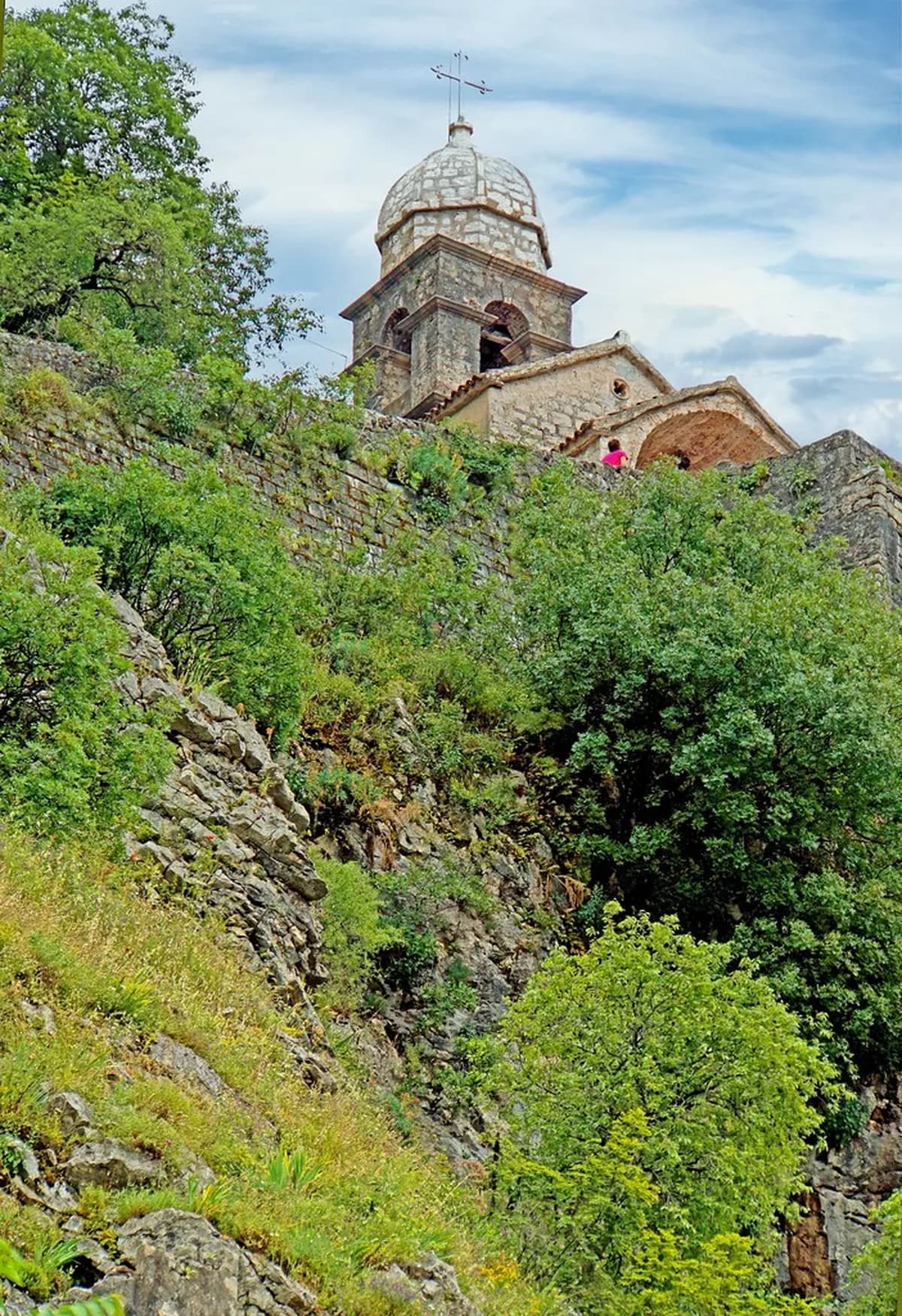
The city walls are a separate experience from the Old Town floor-level circuit, though many tours combine them. The climb passes the Church of Our Lady of Health, a small fortress midway up, and ends at the ruined San Giovanni fortress for panoramic views over the bay. Depending on pace and stops, the walls section alone takes 45 minutes to 90 minutes. Guides who specialize in the walls portion tend to explain the defensive logic of the layout in ways that solo climbers simply miss.
Beyond the main landmarks, better tours include the residential lanes away from the central squares, where local residents still live above ground-floor restaurants. These quieter streets hold the doorways, coats of arms, and small chapels that distinguish Kotor's Old Town from a stage-set tourist zone. For visitors on a tight schedule, even a 90-minute walking tour covers the highlights efficiently and leaves time for a coffee on Piazza of the Arms.
Free vs Paid Kotor Walking Tours
Free walking tours in Kotor operate on a tip-at-the-end model and run from the Sea Gate entrance most mornings during the tourist season. They typically last 90 minutes and cover the Old Town circuit without the walls climb. Group sizes vary widely — on cruise-ship days, a single tour can swell to 30 or 40 people, making it hard to hear the guide or linger at any one spot.
The quality of free tours depends almost entirely on the individual guide, and the best ones in Kotor are genuinely excellent storytellers. The trade-off is unpredictability: you cannot assess a guide's depth until the tour starts, and a tip-based model can attract guides who prioritize pace over substance. For a first visit with no context, a free tour is a solid orientation — but it is rarely the kind of experience you remember for years.
Paid tours, whether small-group or private, offer a more predictable standard and allow you to pre-screen the guide through reviews. Private guides in Kotor typically charge €30–€60 per group for a two-hour Old Town walk, which is reasonable when split among two to four people. They can also tailor the route — slowing down for photography, skipping the most crowded squares, or extending into the city walls without a rigid time limit. For travelers who want to connect historical context to what they are seeing in real time, the paid option is worth the premium.
Our verdict: free tours work well if you arrive early, join a small group, and treat the experience as an introduction rather than a deep dive. For repeat visitors, serious history buffs, or anyone who finds large-group walking tours frustrating, a paid private guide is the better investment. The gap between the best and worst free tours is larger in Kotor than in most European cities, so managing expectations matters.
The City Walls Climb: Guided or Solo?
The city walls are among the most dramatic things to do in Montenegro, and most visitors want to climb them with or without a guide. The entry fee for the walls is typically around €8 per person — check current pricing at the gate, as fees have edged up in recent seasons. Solo climbers can absolutely manage the ascent without a guide: the path is well-marked, the signage is reasonable, and the views at the top reward the effort regardless.
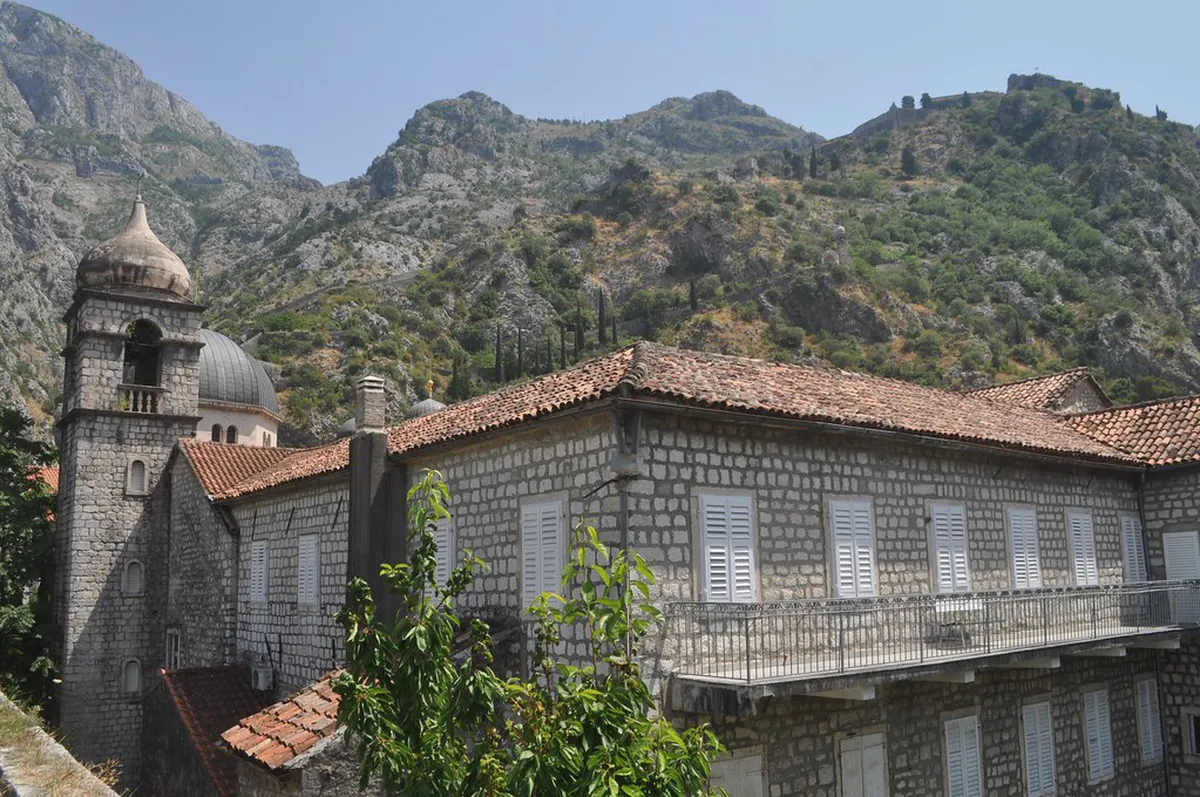
What a guide adds to the walls climb is context, not navigation. Knowing why the Venetians built the wall at this particular angle, which towers were added by the Ottomans versus the Republic of Venice, and what the garrison life looked like in the 17th century transforms a steep staircase into a living document of Adriatic geopolitics. Guides who specialize in the walls tend to stop at points that solo climbers walk past without a second glance. The midpoint Church of Our Lady of Health, for example, is a quiet and deeply atmospheric stop that deserves more than a passing photograph.
Our verdict: for the walls alone, a solo climb is entirely viable and saves money. If you are already paying for an Old Town walking tour, ask whether the guide includes the walls — many do, and combining both in one session is the most efficient use of your time and energy. Avoid climbing in the middle of the day in summer; the heat and exposure on the upper sections are significant, and early morning or late afternoon light is far better for photography.
Top Kotor Walking Tour Options in 2026
Kotor's tour market covers several distinct formats, and matching the right type to your goals makes a noticeable difference. The options below represent the main categories available in 2026, from the most flexible to the most immersive. Prices and availability shift with the cruise ship calendar, so booking a day or two ahead is wise from May through September.
- Free Old Town Walking Tour
- Tip-based group tours depart most mornings from the Sea Gate during peak season.
- Best for first-time visitors who want a low-commitment orientation before exploring solo.
- Typical duration is 90 minutes covering the main squares and cathedral without the walls.
- Private Guided Old Town Walk
- Hire a licensed local guide for a two-hour circuit tailored to your interests and pace.
- Costs run roughly €30–€60 per group and include the residential lanes most group tours skip.
- Ideal for couples or small groups who want historical depth and flexibility on the route.
- Old Town and City Walls Combo Tour
- Combines the ground-level historic circuit with the full 1,350-step walls ascent in one session.
- Plan for two and a half to three hours and wear supportive footwear for the steep climb.
- This format gives the fullest picture of Kotor's medieval defense system and urban layout.
- Evening Walking Tour
- Smaller crowds and cooler temperatures make the evening the most atmospheric time to tour the Old Town.
- Some guides run candlelit or story-focused walks that lean into the city's layered folklore and legends.
- Check availability from April through October, when enough daylight remains for a safe late-day tour.
- Food and History Walk
- Walking tours that weave in local food stops pair the historical narrative with genuine Montenegrin flavors.
- Expect tastings of pršut, local cheese, and Vranac wine alongside the usual landmark circuit.
- These Kotor food tours run two to three hours and suit travelers who want culture and cuisine combined.
Tips to Get the Most From Your Tour
Kotor receives a significant volume of cruise passengers between 8 AM and 1 PM on most days from May to October. Booking a walking tour that starts at 8 AM or after 3 PM keeps you ahead of or behind the main crowd wave, which makes the narrow streets and squares far more enjoyable. If you can only do a midday tour, ask your guide which squares fill up fastest and request that those spots come first or last in the route.

Footwear matters more than people expect: the cobblestones inside the Old Town are uneven, and the city walls path is steep, uneven, and occasionally slippery after rain. Closed-toe shoes with grip are the practical minimum; sandals are manageable on the flat Old Town circuit but are a genuine discomfort on the walls. Bring water regardless of the season, especially if your tour includes the ascent.
Walking tours pair well with wider day-trip planning if you have extra time in the Bay of Kotor. A day trip from Kotor to Perast, Our Lady of the Rocks, or the Lovcen National Park extends the historical thread that a good Old Town walk starts. Kotor is also a natural base for kayaking on the bay, and several operators offer Kotor bay kayaking tours that give a completely different perspective on the walls from the water.
For the city walls in particular, afternoon light between 4 PM and 6 PM produces the best photography conditions, with the sun behind you as you face out over the bay. Afternoon tours also tend to see fewer climbers on the walls than morning sessions, which run simultaneously with most free Old Town tours. Checking whether a tour includes walls entry in the stated price is worth a quick confirmation before booking — some operators list it separately.
Where to Book Kotor Walking Tours
Most Kotor walking tours are bookable through three channels, each with different trade-offs on price, flexibility, and cancellation terms.
- GetYourGuide and Viator — the two main OTA platforms list the widest range of options, from free-tour listings to private guided walks. Prices on these platforms typically match or sit just above direct booking, but the review systems are the most reliable for pre-screening guides. Free cancellation up to 24 hours before the tour is standard on most Kotor listings, which is useful if your cruise schedule or plans shift.
- Direct with a licensed local guide — a number of Kotor-based guides take bookings via WhatsApp or email (contact details usually on their own sites or TripAdvisor profiles). Direct booking occasionally saves €5–€10 per group by cutting platform commission, and it gives you a direct line to the guide for route customisation requests.
- On the day at the Sea Gate — free tip-based tours operate walk-up from the Sea Gate most mornings in season. No advance booking is needed, but from May through September group sizes can be large on cruise-ship arrival days. Arriving at the meeting point 10 minutes early gives you a better position to hear the guide.
For private tours booked through any channel, a deposit of 20–30% is common from June through August when demand is highest. Confirming your guide's cancellation policy before paying a deposit is worth the two-minute check.
| Tour Type | Duration | 2026 Cost | Best For | Verdict |
|---|---|---|---|---|
| Free Old Town Walking Tour | 90 minutes | Tip ~€5–€10 per person | First-time visitors wanting a low-commitment orientation | Good introduction; quality unpredictable — join a small morning group |
| Private Guided Old Town Walk | Two hours | €30–€60 per group | Couples or small groups wanting historical depth & flexibility | Best value when split among two to four people; predictable standard |
| Old Town & City Walls Combo Tour | Two and a half to three hours | Walls entry ~€8 per person (check at gate) | Visitors wanting the fullest picture of Kotor's medieval layout | Most recommended format — covers both circuits in one session |
| Evening Walking Tour | — | — | Travelers wanting smaller crowds and an atmospheric experience | Best ambience; availability April–October |
| Food and History Walk | Two to three hours | — | Travelers who want culture and cuisine combined | Pairs historical narrative with pršut, local cheese, and Vranac wine tastings |
Frequently Asked Questions
Are Kotor walking tours worth it for cruise passengers?
Yes, especially if your ship docks for only four to six hours. A paid private or small-group walking tour lets cruise visitors cover the Old Town and city walls efficiently without wandering aimlessly. Free tours are an option, but group sizes on cruise days can make them noisy and rushed. Booking in advance secures your spot before the ship arrives.
How long do Kotor walking tours take?
Old Town circuit tours run 90 minutes to two hours. Combined Old Town and city walls tours take two and a half to three hours depending on pace and stops. If you want to explore the walls at your own speed after the tour, budget an extra 30 to 45 minutes. Comfortable footwear makes a significant difference on longer sessions.
Is the Kotor free walking tour actually free?
The tour itself is free to join, but guides work entirely on tips paid at the end. A tip of €5–€10 per person is standard for a quality experience, making the real cost close to a budget paid tour. The difference is that you cannot assess quality in advance. Joining early in the morning, when groups are smaller, improves the odds of a good experience.
Can I do Kotor walking tours and a day trip in the same day?
Easily. A morning walking tour finishes well before noon, leaving time for a day trip to Budva or an afternoon kayak on the bay. Budva is roughly 20 kilometres south and takes about 30 minutes by car or bus. Starting the walking tour at 8 AM is the most efficient approach if you want to combine both activities.
What should I wear on a Kotor walking tour?
Comfortable, closed-toe shoes with grip are strongly recommended, particularly if the tour includes the city walls climb. The cobblestones inside the Old Town are uneven, and the walls path is steep and can be slippery after rain. Lightweight layers work well in spring and autumn. In summer, a hat and water are essential given the heat and exposed sections on the upper walls.
Kotor walking tours offer some of the best value of any guided experience on the Adriatic, largely because the Old Town rewards deep context in a way that a quick self-guided wander cannot fully replicate. A two-hour walk with a knowledgeable local guide turns what could be a pleasant but forgettable stroll into a genuinely memorable introduction to Montenegrin history. The city walls add another layer entirely, and combining both in a single session is the format we most consistently recommend.
Free tours are a reasonable starting point, but the quality gap between guides is wider in Kotor than in most comparable destinations, so reading recent reviews before you show up is time well spent. For travelers who want a tailored experience, private guides in the €30–€60 range are available and deliver a noticeably higher standard. Whichever format you choose, book early in the summer months and plan your tour for the early morning or late afternoon to avoid the cruise crowd peak.
After your tour, Kotor's surroundings offer plenty to continue the day: hiking tours above the bay push into the Lovcen hills for elevated views that rival anything the walls provide. Whether you stay in the Old Town or venture further, the walking tour is the best possible foundation for understanding what makes Kotor one of the most distinctive walled cities in the Mediterranean. Start there, and the rest of your visit will make considerably more sense.
Free: The Kotor Essentials guide
Top things to do, where to stay, a perfect day plan, getting around, and the best time to go — a Kotor mini-guide you can take offline.
Plan the next decision
Continue reading
More independent guides you'll find useful