Bruges Free Walking Tour: Full Guide 2026
Planning a Bruges free walking tour? Learn how they work, what they cover, how much to tip, and whether a paid tour gives you more — all in one guide.

On this page
Bruges Free Walking Tour: What to Expect, How to Tip, and Whether It's Worth It
A Bruges free walking tour sounds like an obvious win for any budget traveler. You show up, a guide takes you through the medieval heart of the city, and you pay what you think it was worth. But there are a few things worth knowing before you commit two hours of your morning to one.
⚡ Tour Verdict quick take: Planning a Bruges free walking tour? Learn how they work, what they cover, how much to tip, and whether a paid tour gives you more — all in one guide.
Not all free tours in Bruges cover the same ground, and the "free" label is genuinely misleading. Guides work entirely on tips, so arriving without cash or underestimating a fair amount can sting both your conscience and the person who just spent two hours educating you. This guide breaks down how the tours work, what they include, what they skip, and whether a paid alternative makes more sense for your trip.
Last updated June 2026.
Free: The Bruges Essentials guide
Top things to do, where to stay, a perfect day plan, getting around, and the best time to go — a Bruges mini-guide you can take offline.
How a Bruges Free Walking Tour Works
Most Bruges free walking tours follow the tip-based model pioneered by the global free-tour network. You register online or show up at a designated meeting point — usually the Markt or Burg Square — at the published start time. The guide leads a group of anywhere from 8 to 30 people through the historic center for roughly two hours. At the end, you tip whatever you feel the experience was worth.
Booking ahead is recommended, especially from April through October when group sizes can swell. Most operators use free online reservation systems, and a confirmed slot gives the guide a rough headcount for planning. Walk-up spots are usually available outside peak season, but a large group that shows up unannounced can split into two, which sometimes affects quality. Check the operator's website the evening before to confirm start times, since schedules change with demand.
Guides are typically independent contractors, not salaried employees. Their income depends entirely on how many people show up and how generously those people tip. That structure incentivizes strong performance, but it also means quality can vary tour to tour depending on who leads the session. Reading recent reviews on TripAdvisor or Google is the fastest way to identify which guides consistently earn high marks.
What the Tour Actually Covers
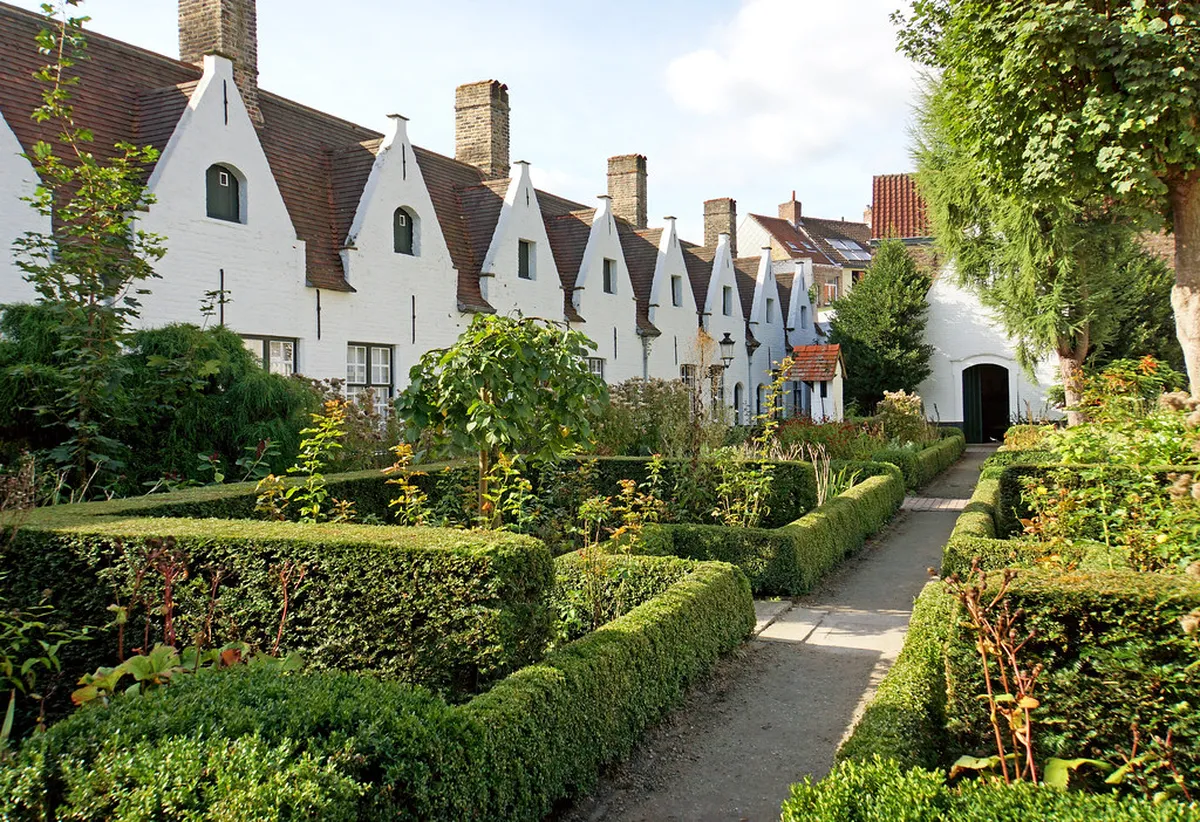
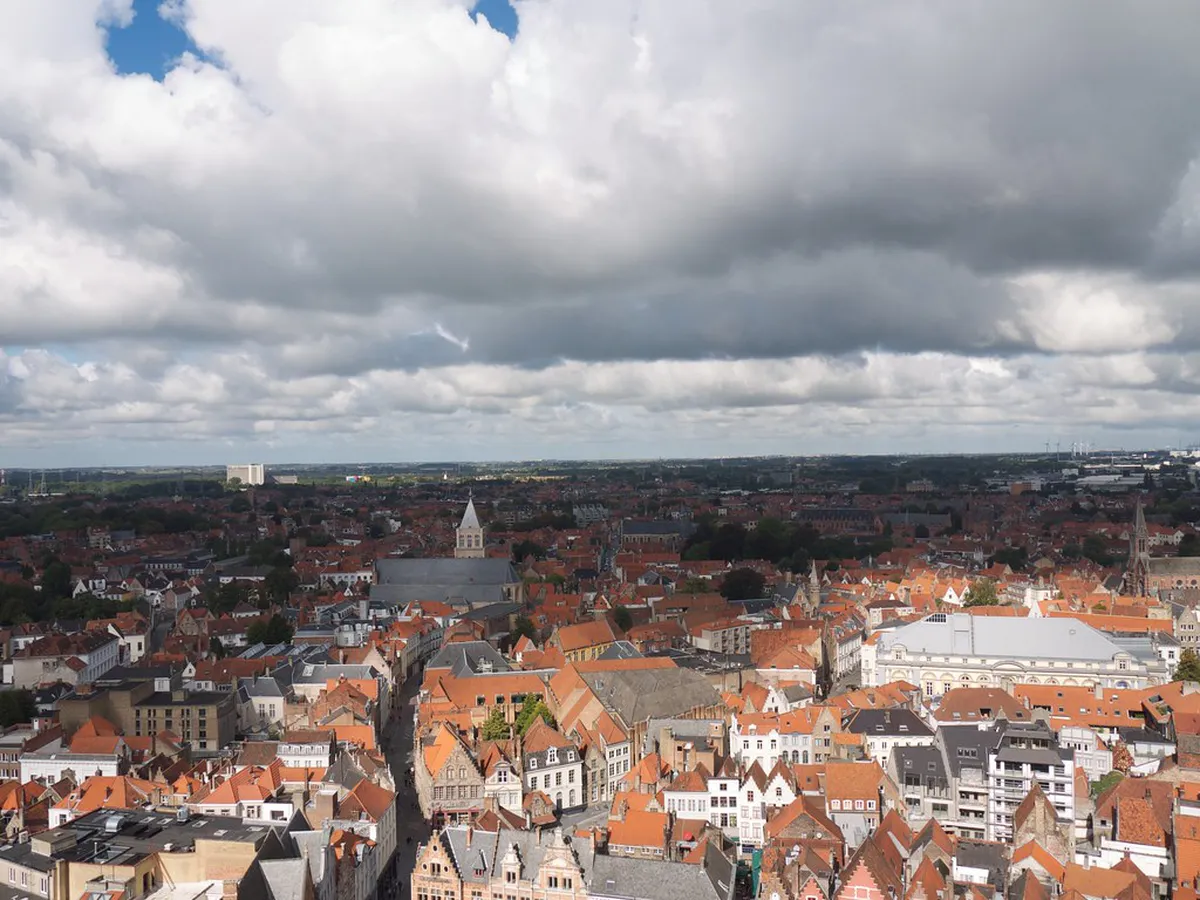
Standard Bruges free walking tours follow a core route through the UNESCO-listed historic center. Expect stops at the Markt, where the 83-meter Belfry dominates the skyline, and Burg Square, which holds the Basilica of the Holy Blood and the Gothic Town Hall. Most tours also pass through the Begijnhof, a tranquil 13th-century beguinage that still houses Benedictine nuns. Canal viewpoints along the Dijver and Rozenhoedkaai round out the visual highlights.
History coverage is generally solid, with most guides touching on Bruges's medieval cloth trade and its decline as a trading hub after the silting of the Zwin estuary. Expect some detail on the city's 19th-century rediscovery by British and Belgian romantics who helped restore its Gothic architecture. Two hours is tight for a city this layered, so guides tend to prioritize narrative over exhaustive detail. If you want deeper context on any specific landmark, asking questions during the tour or at the end almost always yields good results.
The route typically stays within the inner ring canal, covering the eastern and southern quarters of the center. Areas like the Sint-Gillis and Sint-Anna neighborhoods, which hold quieter windmills and lesser-visited churches, rarely feature on standard routes. That's not a criticism — the core route is genuinely excellent — but it helps to know that Bruges has more to offer than the standard two-hour loop. Pairing the free tour with a self-guided Bruges walking tour afterward lets you explore those outer neighborhoods at your own pace.
What Free Tours Usually Skip
Free tours stay outside every museum and paid attraction, which is partly what keeps them free. The Groeningemuseum, home to Flemish Primitive masterworks by Jan van Eyck and Hans Memling, gets a mention but never an interior visit. The same goes for the Gruuthusemuseum and the Hospitalmuseum Sint-Jan. If Flemish art is a priority, build in a separate half-day for at least one of these collections.
Food and drink experiences are also off the agenda for most free tours. Bruges has an exceptional beer culture — over 40 Belgian styles are available across the city's brown cafés — but you won't be stopping to taste any of them on a standard walk. A dedicated Bruges beer tour fills that gap directly, pairing context with actual tastings. Chocolate, too, is a Bruges specialty that deserves its own time: more than 50 chocolate shops operate within the historic center, and a Bruges chocolate tour gives you hands-on workshop access that a walking tour simply can't provide.
Cycling routes around the canals and the wider Flemish countryside are another dimension that foot-based tours miss by design. The flat terrain between Bruges and Damme, a small fortified town 7 km northeast, is one of the most pleasant short rides in Belgium. If you have an extra afternoon, Bruges cycling tours cover that ground efficiently with a guide. Day trips further afield — to Ghent or the North Sea coast at De Haan — are worth considering if you have two or more days in the area.
How Much to Tip and Why It Matters
The standard recommendation across most European tip-based tours is €10 to €15 per person for a two-hour session. In Bruges, where the cost of living is moderate but guide income is entirely tip-dependent, that range is a fair baseline. A guide who was especially engaging, answered questions thoroughly, or delivered in a second language arguably warrants more. If the tour felt perfunctory or the group was too large for real interaction, €8 to €10 is still acceptable.
Cash is by far the most practical option, since many guides carry no card reader. Withdraw euros before the tour starts — there are ATMs near the Markt, but they draw small queues mid-morning during high season. Some operators have recently introduced QR-code tipping via Payconiq or Tikkie, so it's worth asking at the start of the tour if cash is a problem. Either way, coming prepared with a €10 or €15 note avoids an awkward moment at the end.
Group size affects how you should think about tipping. A guide managing 25 people collects more in aggregate but invests far more energy per session than one running a group of 10. Small morning groups — often 8 to 12 people — tend to generate the best interaction and the most personalized answers. Arriving for the first slot of the day (often 10:00 or 10:30) is a reliable way to land in a smaller, quieter group.
Free Tour vs. Paid Tour: The Verdict
Free walking tours work best as an orientation tool, particularly on a first morning in Bruges. They compress two hours of geography, history, and local context into a manageable walk, giving you a mental map before you explore independently. For travelers on a tight budget, the tip-based model can deliver serious value — the core free tour experience in Bruges is genuinely comparable to paid alternatives at the €10 to €15 price point. The key variable is which guide you get, and that's impossible to control for without reading recent reviews.
Paid tours justify their cost in specific situations. Smaller group caps — often 8 to 12 versus the free tour's 20 to 30 — mean more direct interaction and a more curated pace. Specialist paid tours focused on Bruges's art history, the medieval canal system, or a particular neighborhood can go deeper than a free tour ever can in two hours. If you only have one afternoon in the city and want guaranteed depth, a structured guided Bruges walking tour with a fixed itinerary removes the variability risk.
The honest verdict is that free tours and paid tours solve different problems. A free tour is the right call when you're arriving with low prior knowledge and want context before wandering independently. A paid tour earns its extra cost when you have a specific interest — food, architecture, history — and want expert depth on that single thread. Some travelers do both: free tour on day one, paid specialty tour on day two.
- Choose a free tour if you:
- Want an affordable orientation walk on your first morning in Bruges.
- Are comfortable tipping €10–15 in cash at the end of the session.
- Have no strong interest in any one specialist topic like art or beer.
- Plan to explore independently afterward and just need the initial framework.
- Choose a paid tour if you:
- Want a guaranteed small group and a fixed, pre-researched itinerary.
- Have a specialist interest in Flemish art, beer culture, or canal history.
- Are short on time and can't afford a guide who varies in quality.
- Prefer knowing the exact cost upfront rather than deciding at the end.
Tips for Getting the Most from Your Tour
Arrive five to ten minutes early at the meeting point. Guides often use the pre-tour window to introduce themselves and answer logistical questions, which helps the group get settled before the walk begins. Late arrivals can disrupt the narrative flow and occasionally mean missing the first landmark entirely. The Markt is easy to find from any part of the historic center, but allow extra time if you're coming from a hotel outside the ring canal.
Wear comfortable shoes with adequate support — cobblestones cover most of the historic center, and two hours on uneven stone surfaces can be rough on flat-soled footwear. Bring a light layer even in summer, since canal-side sections can feel cooler than the open squares. A small bottle of water is practical on warm afternoons, particularly since mid-tour stops at cafés rarely feature on the free tour format. If you're visiting with children, check in advance whether the operator runs a family-friendly version with a shorter route and simpler storytelling.
Consider pairing the free tour with a day trip for a fuller Bruges-region experience. The train to Ghent takes around 25 minutes and opens up an entirely different medieval city with its own canal network and castle. A Bruges to Ghent day trip is an easy add-on for travelers with two or more days in the area. For those who want to see more of the Belgian coast or the hinterland, the best day trips from Bruges cover several options across different transport modes and distances.
Where to Book a Bruges Free Walking Tour
Two operators run the most consistent tip-based tours in Bruges. Sandeman's New Europe Tours (neweuropetours.eu) departs daily from the Markt at 10:00 and 14:00 from April through October, and at 10:00 only from November through March. Booking is free on their site; the confirmation email doubles as your reservation. Group caps are soft — arrivals are rarely turned away — but registering online keeps you in the guide's count. Free Walking Tour Bruges (freewalkingtourbruges.com) is a smaller independent operator with departures at 11:00 daily; groups tend to stay under 15, which makes it worth trying if you missed the early Sandeman's slot. Both meet at the Markt fountain — the large central square with the Belfry visible from all sides — and require no payment upfront. Tipping in cash at the end remains the standard; bring a €10–15 note per person.
| Option | Duration | Group size | 2026 cost | Best for |
|---|---|---|---|---|
| Free walking tour (general) | ~2 hours | 20–30 | €10–€15 tip | Orientation on a first morning; budget travelers |
| Sandeman's New Europe Tours | ~2 hours | Soft cap (rarely turned away) | €10–€15 tip | Flexible scheduling; Apr–Oct 10:00 & 14:00, Nov–Mar 10:00 only |
| Free Walking Tour Bruges | ~2 hours | Under 15 | €10–€15 tip | Smaller group feel; departs 11:00 daily |
| Paid tour | ~2 hours | 8–12 | Fixed (exact cost upfront) | Specialist interest (art, beer, canal history); guaranteed depth |
Frequently Asked Questions
Are Bruges free walking tours actually free?
They are free to join but not free to attend fairly. Guides work entirely on tips, so the expected contribution is €10 to €15 per person for a standard two-hour session. Showing up with no intention to tip is considered poor etiquette and directly affects the guide's income. Bring cash, since card readers are not always available.
How long does a Bruges free walking tour last?
Most standard free walking tours in Bruges run for approximately two hours. The pace is moderate with brief pauses at each landmark for commentary and questions. Some operators offer extended versions covering additional neighborhoods, which can run up to two and a half hours. Check the operator's listing for the precise duration before booking.
Do I need to book a Bruges free walking tour in advance?
Booking ahead is strongly recommended from April through October when group sizes regularly exceed 20 people. Most operators offer free online reservations that take under two minutes to complete. Outside peak season, walk-up spots are usually available, but confirming the day before avoids a wasted trip if a session is cancelled due to low demand.
What is the best time of day for a free walking tour in Bruges?
The first tour slot of the day — typically 10:00 or 10:30 — tends to draw smaller groups and quieter streets than afternoon departures. Morning light also makes the canal views and Markt considerably more photogenic. Afternoon tours are perfectly fine but can feel more crowded, especially in July and August when tourist traffic peaks across the historic center.
Can I combine a free walking tour with a food or drink experience?
Yes, and it works well as a two-part day. Do the free tour in the morning for historical context, then book a specialist experience for the afternoon. A Bruges food tour covers the city's culinary highlights — local cheese, waffles, and Flemish stew — in a format that free walking tours rarely touch on.
A Bruges free walking tour is a genuinely strong introduction to one of Europe's best-preserved medieval cities. The tip-based model works when you understand it going in, bring cash, and set realistic expectations about group size and coverage. For pure orientation value at a reasonable cost, it's hard to beat.
The tour won't replace a dedicated beer tasting, a museum afternoon, or a cycle through the Flemish countryside, but it was never designed to. Think of it as the opening chapter rather than the full story. Pair it with a specialist experience or a day trip and you'll leave Bruges with a much richer sense of the place than the free tour alone could ever deliver.
Free: The Bruges Essentials guide
Top things to do, where to stay, a perfect day plan, getting around, and the best time to go — a Bruges mini-guide you can take offline.
Plan the next decision
Continue reading
More independent guides you'll find useful